How to Find a Credible IAOMT or IABDM Directory Dentist
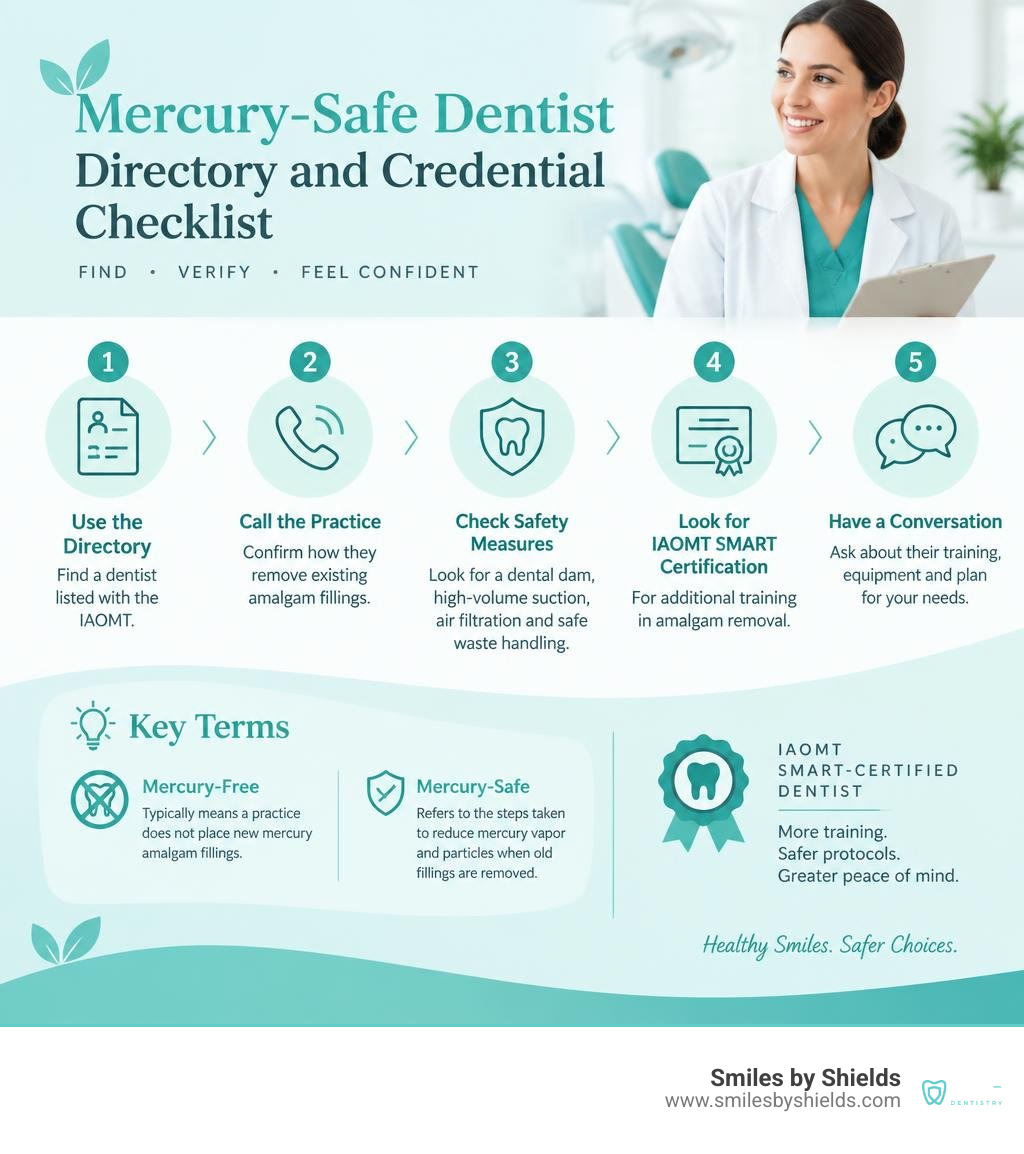
To find a credible IAOMT or IABDM provider, start with their directories, then call the practice to confirm how it removes existing amalgam fillings. Ask whether the dentist uses protective measures such as proper isolation, high-volume suction, air filtration, and safe waste handling. For added training specific to amalgam removal, look for an IAOMT SMART-certified dentist.
A key point: mercury-free usually means a practice does not place new mercury amalgam fillings. Mercury-safe refers to the steps taken to reduce mercury vapor and particles when old fillings are removed. These terms are not interchangeable, and a directory listing alone should not replace a conversation about the dentist’s training, equipment, and plan for your needs.
I’m Dr. Tiffany K. Shields, a Fellow of the IAOMT and an integrative dentist focused on biocompatible materials and individualized care. My experience evaluating mercury-safe protocols helps patients understand what to look for when researching the international association of mercury safe dentists and related credentials.
Relevant articles related to IAOMT and IABDM mercury-safe dentistry:
- biocompatibility testing in mercury-safe care
- evaluating IAOMT or IABDM-style holistic dentists
- non-invasive treatments in biological dentistry
Understanding IAOMT, IABDM, and Mercury-Safe Dentistry Standards

When people discover the connection between oral health and whole-body vitality, their first instinct is often to look at the metals in their mouth. For decades, traditional dental amalgam fillings—often called “silver fillings”—have contained roughly 50% elemental mercury by weight. While they were historically praised for their durability and ease of placement, modern biological dentistry views them through a completely different lens.
Organizations like the International Academy of Oral Medicine and Toxicology (IAOMT) and the International Academy of Biological Dentistry and Medicine (IABDM) help connect patient safety with advanced dental education. Their work focuses on teaching the public about dental mercury risks, promoting safer clinical protocols, and helping patients find dentists who follow mercury-safe, biological, and whole-body dental principles.
At Smiles by Shields in Jacksonville, Florida, we believe every patient deserves transparency about the materials placed in their bodies. When you seek a practitioner aligned with IAOMT or IABDM principles, you are looking for someone who understands that your mouth is not separate from the rest of you. It is a gateway to your overall health.
History and Purpose of IAOMT and IABDM Mercury-Safe Standards
The roots of the IAOMT and IABDM stem from a growing awareness among forward-thinking dentists that traditional amalgam removal generated intense spikes in toxic mercury vapor. Early pioneers in holistic dental care noticed that standard drilling techniques produced fine aerosols and invisible fumes that both patients and clinic staff inhaled.
To address this issue, these organizations were formed as an educational and advocacy network. Its primary goals include:
- Public Education: Demystifying dental materials and explaining the risks of chronic, low-dose mercury exposure from everyday chewing, brushing, and hot liquids.
- Practitioner Accountability: Helping patients locate providers who agree to follow comprehensive safety standards rather than simply drilling out fillings unprotected.
- Holistic Advocacy: Encouraging the dental profession to transition entirely toward biocompatible, non-metallic restorative materials.
The associations serve as beacons for patients who are navigating complex health challenges and want to ensure their dental team avoids adding unnecessary toxic burdens to their immune systems.
Mercury-Free vs. Mercury-Safe Dentistry
One of the most frequent points of confusion for our patients is the distinction between a dentist who is mercury-free and one who is mercury-safe. While the terms sound almost identical, their clinical meanings are worlds apart.
A mercury-free dentist simply chooses not to place new silver amalgam fillings. Today, many conventional dental practices fall into this category, primarily because tooth-colored composite resins and ceramics look significantly better. However, when an old silver filling fractures or develops recurrent decay underneath, a mercury-free dentist might drill it out using standard high-speed drills without any specialized vapor capture, supplemental air, or protective barriers.
A mercury-safe dentist, by contrast, understands that the most hazardous moment in the lifespan of an amalgam filling is the moment it is drilled. The friction of the drill heats the metal, instantly releasing heavy concentrations of toxic mercury vapor and particulate dust. A mercury-safe practice employs strict, layered physical safeguards to capture these vapors at the source.
Understanding how mercury fillings may affect health and the environment is essential when deciding how to address existing dental work.
| Feature | Mercury-Free Dentist | Mercury-Safe Dentist (e.g., IAOMT / IAMSD) |
|---|---|---|
| Places New Amalgam Fillings? | No | No |
| Specialized Vapor Suction (At Source)? | Rarely | Yes (High-volume filtration) |
| Supplemental Oxygen for Patient? | No | Yes (External nasal mask) |
| Chunk-Removal Technique? | No (Grinds down filling) | Yes (Sections filling into large blocks) |
| Clinic Air Scrubbers & Negative Ionizers? | Standard HVAC | Specialized HEPA/Carbon filtration |
| Eco-Friendly Waste Amalgam Separators? | Basic plumbing traps | ISO-certified amalgam separators |
Rigorous Protocols for Safe Mercury Amalgam Removal
Removing dental amalgams safely is not a matter of speed; it is an exacting, systematic science. At Smiles by Shields, Dr. Shields is proud to practice IAOMT mercury safe dentistry, ensuring every protocol protects the delicate biological balance of our patients.
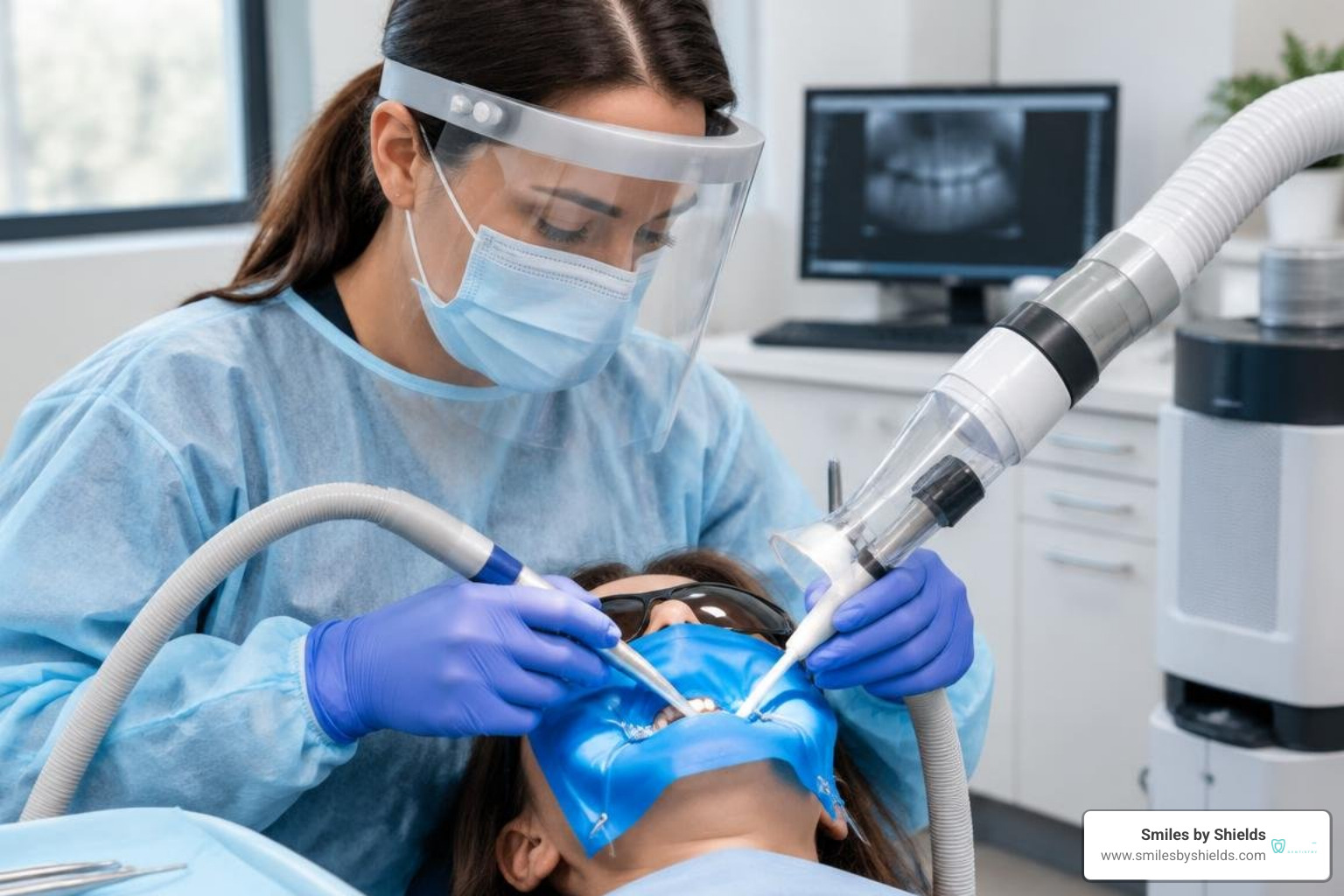
Gaining a deep understanding of safe amalgam removal allows you to feel confident and fully prepared during your appointment.
IAOMT Standards, SMART Certification, Accreditation, and Fellowship
While the IAMSD provides vital public directory listings and patient resources, the International Academy of Oral Medicine and Toxicology (IAOMT) is the gold standard scientific research and professional training academy in biological dentistry. The IAOMT maintains a vast library containing abstracts for over 1,500 peer-reviewed scientific articles supporting biocompatible, mercury-free dentistry.
To bridge scientific theory and daily clinical practice, the IAOMT developed the Safe Mercury Amalgam Removal Technique (SMART) certification. Achieving SMART certification is not a simple weekend checkbox. Dentists must complete a rigorous educational curriculum consisting of:
- Three comprehensive units of scientific readings, video tutorials, and technical tests covering mercury toxicology, vapor dynamics, and occupational safety.
- Hands-on mastery of required clinical equipment, patient isolation barriers, and clinic airflow management.
- Formal case presentations reviewed by biological dental experts to confirm strict adherence to safety standards.
Beyond SMART certification, dentists can pursue full Accreditation (AIAOMT) through advanced IAOMT coursework and testing. This deeper training explores topics such as systemic toxicology, mercury exposure, fluoride, biocompatible materials, jawbone health, and other whole-body dental concerns.
Some accredited dentists go further by pursuing IAOMT Fellowship (FIAOMT). Fellowship reflects an additional commitment to biological dentistry through continued study, scientific review, and professional contribution beyond the accreditation level. In simple terms: SMART focuses on safer amalgam removal, Accreditation broadens biological dental training, and Fellowship shows an even higher level of ongoing IAOMT involvement.
Learning what it means to be an IAOMT dentist helps patients appreciate the commitment required to master these biological concepts, helping resolve the mercury mystery once and for all.
Step-by-Step Amalgam Removal and Patient Protection
When you sit in the dental chair for a SMART-certified procedure, the entire operatory transforms into a controlled, clean-air environment. Here is how the sequence unfolds:
- Pre-Rinse and Binding Agents: The patient rinses with an absorbent binding agent, such as activated charcoal or chlorella slurry, to help capture stray particles before work begins.
- Protective Draping: The patient’s body and clothing are covered with impermeable barriers, and protective eyewear is placed. The dental team wears specialized protective gear, including fluid-resistant gowns and respiratory-grade masks.
- Proper Tooth Isolation: The treatment area is carefully isolated using appropriate barriers and suction placement to help keep debris, particles, and rinse water away from the throat and soft tissues. A saliva ejector is positioned to reduce fluid buildup throughout the procedure.
- Alternative Oxygen Source: The patient breathes clean, medical-grade oxygen delivered through an external nasal cannula or mask, helping prevent inhalation of ambient operatory air during the procedure.
- High-Volume Vapor and Aerosol Extraction: Two suction systems operate at the same time. A specialized high-speed suction tip stays close to the tooth, while a large, flexible high-volume air filtration arm sits inches outside the mouth to pull vapors into medical-grade HEPA and activated-charcoal filters.
- Copious Cold-Water Irrigation and Chunking: The dentist uses generous amounts of cold water to keep the filling cool and minimize vaporization. Instead of grinding the metal into fine dust, the dentist carefully sections the filling into larger chunks that are vacuumed away quickly.
- Post-Removal Cleanse and Restoration: Once the metal is fully removed, the tooth and mouth are thoroughly rinsed again with binding agents. The tooth is then restored using biocompatible, metal-free materials.
There are many clear systemic reasons why you should have amalgam fillings removed, especially if they are breaking down, causing structural fractures, or contributing to chronic health challenges.
How to Locate and Vet a Credible Mercury-Safe Dental Practice
Finding the right practitioner requires a little bit of homework, but knowing what questions to ask makes the process straightforward.
When ditching amalgam fillings for a mercury free dentist, you want to make sure their clinical actions match their marketing claims.
Searching the IAOMT Mercury-Safe Dentist Directory
The IAOMT and IABDM online public directories allow you to search by city, state, or zip code to find practitioners in your area. However, it is important to understand how to read these directories:
- Check Specific Credential Tiers: Look for whether the dentist is a General Member, SMART Certified, Accredited (AIAOMT), Fellow (FIAOMT), or Master (MIAOMT). Higher levels indicate extensive ongoing education and peer-reviewed case presentations.
- Recognize Regional Differences: Some geographic regions have fewer certified providers due to local regulations or infrastructure limitations. For example, the IAOMT has maintained temporary exceptions for amalgam separator requirements in certain international regions, such as Costa Rica, where commercial recycling infrastructure is still developing. In the United States, strict EPA and local guidelines govern amalgam separator use.
- Verify Directly with the Practice: Directories are excellent starting points, but you should always call the dental office directly to discuss their current protocols.
Key Questions and Biocompatible Treatments to Look For
Before scheduling your procedure, call the office and ask the following essential questions:
- “Will I be provided with an external source of oxygen or clean air to breathe during the procedure?”
- “What type of air filtration and source-capture vacuum systems do you use in the operatory?”
- “Do you slice the fillings into large chunks with copious water cooling, or grind them out?”
- “What replacement materials do you use, and do you offer biocompatibility testing?”
At Smiles by Shields in Jacksonville, Florida, our biological philosophy extends far beyond just removing metal. We offer comprehensive, non-toxic holistic therapies designed to support total wellness:
- Biocompatible Restorations: We routinely replace silver fillings with porcelain or biocompatible, BPA-free composite resins that bond seamlessly to natural tooth structure.
- Medical Oxygen/Ozone Therapy: We use ozone gas and ozonated water to sterilize prepared tooth surfaces naturally, destroying residual bacteria and pathogens without harsh chemicals.
- Fluoride-Free Philosophy: We recognize emerging health concerns regarding chronic systemic fluoride intake; you can learn more about why we choose not to use fluoride in our practice.
- Low-Radiation Digital Imaging: We utilize advanced digital X-rays and 3D Cone Beam Computed Tomography (CBCT) to evaluate your jawbone, airway, and tooth roots with minimal radiation exposure.
The International Academy of Oral Medicine and Toxicology (IAOMT) is a multidisciplinary scientific research organization and accredited educational institution. The IAOMT funds peer-reviewed research, develops standardized clinical safety protocols (such as SMART), and provides rigorous, multi-tiered certification programs (Accredited, Fellow, Master) for dentists, dental hygienists, and medical physicians worldwide.
Why is specialized equipment required for removing silver fillings?
When an amalgam filling is drilled without specialized safety equipment, the friction generated by the dental bur instantly vaporizes mercury. This creates an invisible, odorless cloud of mercury gas alongside microscopic particulate dust.
Standard dental suction units are designed to remove water and saliva—they do not capture ambient airborne vapors. Without specialized high-volume air extractors, nitrile rubber dams, and external oxygen delivery, the patient, the dentist, and the dental assistants inhale these toxic vapors directly into their lungs, where mercury is rapidly absorbed into the bloodstream. Specialized equipment captures and filters out these contaminants right at the source, preventing both personal exposure and environmental contamination.
Conclusion: Choosing Whole-Body Wellness in Dental Care
Your dental health is an inseparable component of your overall physical well-being. Opting for mercury-safe dentistry is not merely an aesthetic upgrade—it is a proactive commitment to reducing chronic toxic burdens on your body.
At Smiles by Shields in Jacksonville, Florida, our dedicated team is committed to providing compassionate, individualized, and truly biocompatible dental care. We treat every patient as an individual with unique biological needs, utilizing modern technology, ozone therapy, and rigorous SMART protocols to protect your health at every step.
If you are ready to take control of your systemic health and want a partner who honors the oral-systemic connection, we invite you to explore what holistic dentistry means for your overall health and schedule your consultation with us today.